
Sporanox (Itraconazole)
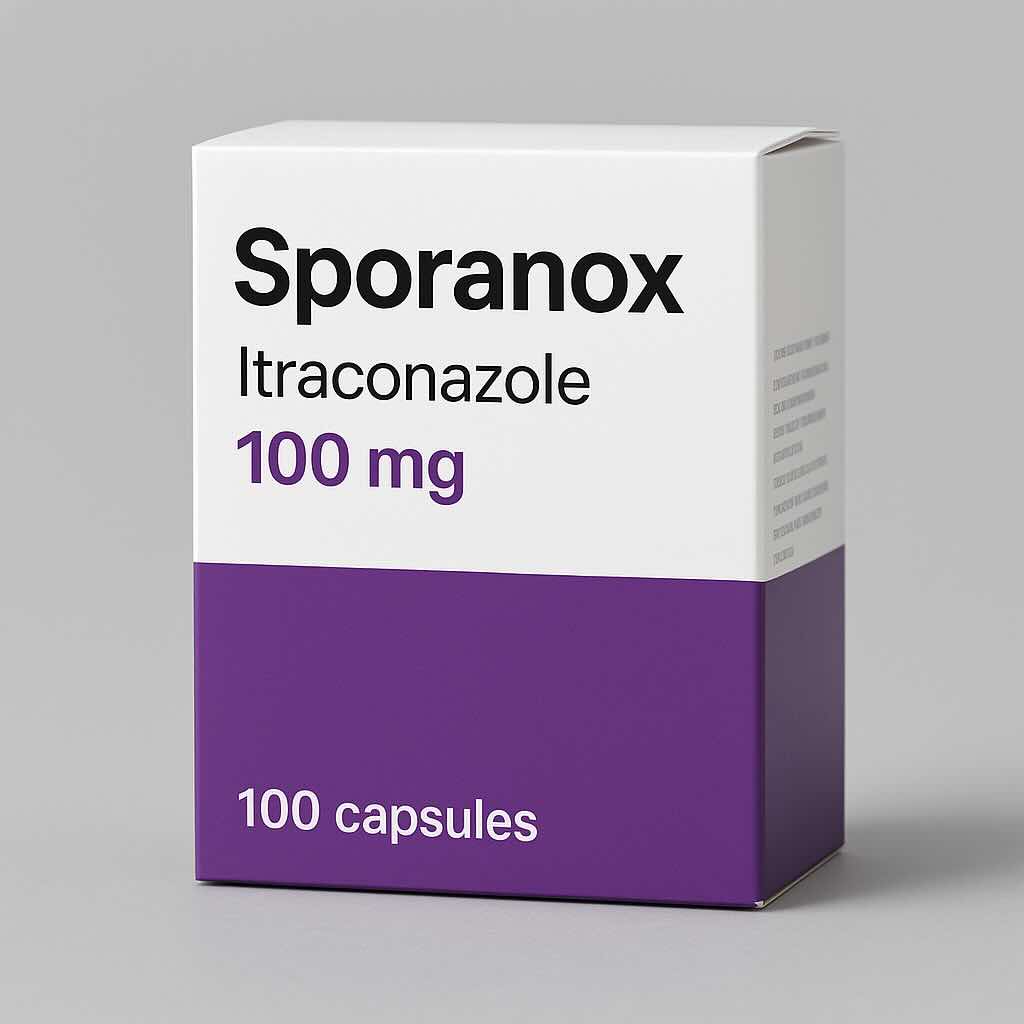
Itraconazole is a prescription antifungal from the triazole family, available as capsules and an oral solution for treating selected fungal infections of the nails, skin and internal organs. It interferes with the production of ergosterol, a substance fungi need to maintain their cell membranes, and thereby limits the growth of susceptible organisms. The medication requires medical supervision because it can affect the liver and heart, interact with other prescription drugs and behave differently depending on the formulation used.
1
Select strengthChoose the strength you want to order
2
Choose packageCompare available quantities and prices
3
Add to cartReview your selection and continue
Select strength
Choose from the available dosages below100 mg
Choose quantity for 100mg
Your selection
Dosage100 mgPackageNot selected
Total Price–Select package first
- Prescription required. Itraconazole may be prescribed for confirmed or appropriately diagnosed fungal disease when the provider determines that systemic antifungal treatment is suitable.
- Approved prescriptions may be sent to an eligible licensed pharmacy when the prescribed formulation is available and the pharmacy can safely fulfill the prescription.
- Consultation, diagnostic testing and medication charges may be separate, particularly when nail testing or other fungal confirmation is required.
- Take the exact itraconazole formulation and schedule prescribed because different formulations have important administration and absorption differences.
- Important safety warning. Sporanox capsules carry a boxed warning for congestive heart failure/cardiac effects and major drug interactions. The capsules should not be used for onychomycosis in patients with ventricular dysfunction or a history of congestive heart failure.
- A thickened or discolored nail may require fungal testing because trauma and other nail diseases can resemble onychomycosis.
- Adverse events. New shortness of breath, swelling, liver-related symptoms or another serious reaction requires prompt provider review and may be reported to FDA MedWatch.
Brief Pricing Overview
| Sporanox (Itraconazole) | Strength: 100 mg | |
| Option | Price | How Much You Save |
|---|---|---|
| 20 capsules | $116.99 | $23.00 |
| 30 capsules | $158.99 | $51.00 |
| 40 capsules | $192.99 | $87.20 |
| 50 capsules | $218.99 | $131.00 |
| Price: $4.38 per tablet | ||
| *Itraconazole is available only with a valid prescription from a licensed healthcare professional. | ||
Frequently Asked Questions
Can you buy Sporanox without a prescription?
Itraconazole is a prescription antifungal medicine in the United States. The medications are based on Itraconazole, a fungicidal substance effective in a variety of fungal infections that affect different body parts such as vaginal yeast infection, oral yeast infection, skin and nail fungal infections, and even meningitis caused by fungi. A licensed clinician must review your medical history, current symptoms, and any test results and write a prescription before a pharmacy can dispense it.
Can an online prescription for Sporanox be used at a local pharmacy?
In most cases, local pharmacies accept prescriptions that were issued online, as long as they come from a licensed U.S. clinician. After your telehealth visit, the prescription for Sporanox can usually be sent electronically to the pharmacy you choose.
How long does delivery take across the United States?
Standard delivery across the United States usually takes from 3 to 7 business days once your Sporanox prescription is approved and the order is processed. Shipping times can be different for remote areas, holidays, or severe weather.
How to Get Itraconazole Online
Step 1 – Arrange an Online Medical Consultation
Patients seeking itraconazole through a telehealth platform generally begin by arranging a consultation with a licensed clinician and describing the suspected fungal infection. The service may request photographs of affected skin or nails, details of earlier treatments and a list of current medications. Appointment availability and consultation requirements depend on the provider and the patient’s location.
Step 2 – Review the Diagnosis and Treatment Options
The clinician reviews the symptoms, medical history and any available test results to determine whether oral antifungal treatment is appropriate. Liver disease, heart failure and potential drug interactions require particular attention before itraconazole is considered. The doctor may also need to confirm the fungal diagnosis and decide whether capsules or oral solution are suitable, since these formulations have different absorption and administration requirements.
Step 3 – Receive a Prescription if Treatment Is Appropriate
If itraconazole is prescribed, the clinician may send an electronic prescription to a licensed local or online pharmacy selected by the patient. The pharmacy verifies the prescription and dispenses the prescribed formulation when it is available, with pickup or delivery determined by its services. Some patients may need laboratory testing or an in-person examination before the prescription can be issued.
Price Comparison
| Telehealth Service | Price per 100 mg capsule |
|---|---|
| Blink Health | $2.50 – $4.00 |
| Hims | ≈ $3.00 – $4.50 |
| Lemonaid Health | ≈ $3.20 – $5.00 |
| ZipHealth | $2.20 – $3.80 |
| Roman (Ro) | ≈ $3.50 – $5.50 |
| GoodRx Marketplace | ≈ $1.80 – $3.20 |
*Prices are approximate and may change depending on quantity, pharmacy fulfillment, subscription plans, or state availability.
Telehealth Pharmacy Benefits
Telehealth services can help patients talk with licensed clinicians, receive electronic prescriptions when appropriate, and manage treatment from home. Each online visit follows the same medical and privacy standards as an in person appointment.
Key advantages
- Access to licensed doctors across the United States;
- Secure video visits that follow HIPAA privacy rules;
- Electronic prescriptions sent directly to partner pharmacies;
- Flexible scheduling with appointments available any day of the week;
- Telehealth services that are covered by many major insurance plans;
Important Product Information
| Active ingredients: | Sporanox contains the active ingredient Itraconazole, a triazole antifungal agent. It blocks the synthesis of ergosterol, a key component of fungal cell membranes, which weakens the cell wall and stops the growth of susceptible fungi in the skin, nails, and internal organs. |
| Indications: | – Skin fungal infection; – Nail fungal infection; – Candidiasis; – Vaginal yeast infection; – Fungal infection of internal organs; – Cryptococcal meningitis. |
| Mechanism of action: | Itraconazole inhibits fungal cytochrome P450–dependent enzymes involved in ergosterol production. By disrupting ergosterol synthesis, it alters the permeability and function of the fungal cell membrane, leading to impaired growth and gradual death of the fungus at the site of infection. |
| Benefits: | – Helps to treat fungal infections of various severity and localization easily. |
| Side Effects: | – Nausea, stomach upset, or abdominal pain – Diarrhea or constipation – Headache – Dizziness or fatigue – Elevated liver enzymes on blood tests – Swelling in the legs or shortness of breath (less common, needs prompt review) – Yellowing of the skin or eyes, dark urine, or severe fatigue (possible liver injury, needs urgent care) – Irregular heartbeat, chest discomfort, or fainting (rare, but serious). |
| Storage: | Store Sporanox capsules at room temperature, 68°F–77°F (20°C–25°C), in a dry place away from heat and direct sunlight. Keep the medication in its original container with the lid tightly closed. Do not use it past the expiration date. Keep out of reach of children. |
| Brand vs. Generic: | Brand-name Sporanox and FDA-approved generic itraconazole products contain the same active ingredient in equivalent strengths and are expected to have the same clinical effect when used as directed. Appearance and packaging may differ, but approved generics must meet the same quality and performance standards as the brand. |
| Alternatives: | Candistat, Itroel, Itrizole, Oriconazole, Sporal, Triasporn. |
| Manufacturer: | Sporanox is manufactured for and distributed by Janssen Pharmaceuticals and other authorized companies. FDA-approved generic itraconazole is produced by additional manufacturers that must follow good manufacturing practice (GMP) requirements. |
| Interactions: | If you use some of the medicines listed in this section, your clinician should review them carefully before you start Sporanox, because certain combinations can increase side effects or change how the drug works: – Some heart medicines, including certain calcium channel blockers and drugs that affect heart rhythm; – Cholesterol-lowering statins that are metabolized by CYP3A4; – Certain benzodiazepines, immunosuppressants, and other drugs processed by liver enzymes affected by itraconazole; – Other medicines that may affect liver function or the electrical activity of the heart. Always tell your doctor and pharmacist about all prescription drugs, over-the-counter medicines, and supplements you use. |
| Overdosing: | Symptoms of an overdose may include severe nausea, vomiting, abdominal pain, dizziness, headache, or signs of liver or heart problems. If you suspect that you have taken too much Sporanox, stop taking the medicine and seek medical help right away. Treatment is usually supportive, and a clinician will decide what steps are needed based on your symptoms and examination. |
What to Ask Your Doctor Before Starting Sporanox?
What are the pills sold as Generic Sporanox and why are they cheaper?
In order to get the best possible experience with the medicine and to avoid the various side effects, you must remember some of the basic conditions of the safe drug usage. The medication comes in a form of capsules. You are supposed to consume the single capsule right after you complete your full meal.
The capsule has to be stored in safety, therefore breaking, chewing and crushing it is highly not recommended. However, if you have accidentally broken it, you need to find out the clear information about the disposal of the broken capsule. The medication is required to be taken for the full amount of time, no longer or less than it was prescribed on your label.
Sometimes the symptoms of the disorder are known to be improved before the complete clearing of the infection, so you need to complete your treatment according to the doctor’s directions. Ask the professional advice for solving more complicated issues, if there are any, and always try to clarify all the questions that seem unclear to you for some reason. You also should not skip the doses, because this will increase your chance to develop the same infection in the future, which will become resistant to the medicine that is meant to treat fungal issues and related infections.
This medication is not meant to deal with some common viral infections, which means it will not ease the symptoms of cold or flu. While you are going through your treatment with itraconazole, your medical assistant will track the condition of your blood and is frequently going to appoint you for the blood tests. These are necessary, because they will check your general progress and determine how much the medicine has improved your condition. Do not miss the regular doctor’s appointments and take every advice into account.
You should be aware of the possible complications which can impair the speed of your reactions and the clearness of your thinking. In order not to struggle with the possible consequences of this, try to lead a calm and comfortable way of life during your treatment, without any dangerous or risky activities. You need to avoid the things which require you to be especially focused and alert.
When should you consider purchasing Itraconazole?
The medication is used for the therapy of various mycoses or fungal infections that affect different body parts. It is appointed for the therapy of vaginal yeast infection including acute and chronic one, skin mycosis, oral mycosis, eye mycosis induced by dermatophytes and/or yeast fungi; systemic mycoses, systemic aspergillosis, candidiasis, cryptococcosis, histoplasmosis, sporotrichosis, paracoccidioidosis, blastomycosis, and other systemic mycoses. In real life this usually means that a doctor has already confirmed a fungal infection based on your symptoms, physical examination, and, if needed, lab tests such as cultures or microscopic examination. For many patients the pills are considered when local creams, ointments, or suppositories did not help enough, when the infection comes back again and again, or when it is located in places where topical forms cannot reach the affected tissue well. People with diabetes, weakened immune system, long courses of antibiotics, or chronic hormone therapy are more likely to develop these infections and may need systemic treatment sooner because their bodies clear fungi less effectively. The same is true for patients who have several areas affected at the same time, for example nails, skin folds, and genital area, because in such cases local therapy alone often cannot control the whole process. The pills may also be chosen when the infection interferes with daily activities, sleep, or intimate life, and a faster and more reliable systemic effect is needed under medical supervision.
What you should know about all of these infections is that they are caused by contraction of a fungal infection that is contagious. They can infect the skin, mucosa, nails, hair, and internal organs. The common symptoms of such infections are wetting, itching, peeling, inflammatory skin phenomena, and stratification of scales, thickening, and change in the structure of the skin, nails, hair or organs. If you scratch the place of infection, the secondary infection can develop and then suppuration can occur. These diseases are highly contagious and severely lower the quality of life of an affected individual through the negative symptoms, limitations of social life and cosmetic defects. Besides, without the therapy, the fungal infections never go away or become less intense and can instead develop into a generalized fungal infection affecting all the body. Which is why if you are diagnosed with one of these conditions, you should without any delay buy Sporanox or its cheaper analog and start the therapy. At the same time, it is important to understand how easily fungi spread in everyday situations: through shared showers, locker rooms, swimming pools, common towels, shoes, or close physical contact. Wearing tight, non-breathable shoes, synthetic underwear, or staying in wet clothes for long periods creates a warm and moist environment that helps fungi grow and makes recurrences more likely. Chronic conditions such as obesity, excessive sweating, and uncontrolled blood sugar further support these infections and often require longer courses of systemic medication combined with lifestyle changes.
Typical warning signs that should push you to see a healthcare professional and discuss systemic antifungal pills include persistent or spreading redness, cracks between toes or in skin folds, repeated vaginal yeast infections that come back after local treatment, thickened or discolored nails that slowly worsen, or mouth and throat plaques that do not clear with standard rinses. People who recently had chemotherapy, organ transplantation, serious surgery, or long stays in intensive care are at special risk for systemic mycoses and should never delay evaluation if fever, cough, weight loss, or unexplained weakness appear together with signs of fungal infection. In all these cases the choice to purchase Sporanox or a generic analog should follow a clear prescription that specifies dose, frequency, and duration, because under-dosing or stopping too early can lead to relapse and development of more persistent forms of the disease. During the treatment you usually need to take the capsules or solution at the same time each day, avoid skipping doses, and report any unusual symptoms to your doctor so that therapy can be adjusted in time. Regular follow-up visits or remote check-ins help to evaluate how well the infection is responding and decide when it is safe to stop the medication.
When should not Generic Sporanox be taken?
Although mycotic infections are very unpleasant and tend to spread, under certain conditions the use of the medication is contraindicated. These cases include allergy to the medication, pregnancy, and breastfeeding. An allergy can show up as skin rash, itching, swelling of the face or throat, shortness of breath, or severe dizziness after taking itraconazole or similar antifungal pills, and in that situation the drug must be stopped and not restarted. During pregnancy, systemic antifungal pills are usually avoided unless there is a serious, life threatening infection, because the active substance can affect the developing fetus, so women of childbearing age are often advised to use reliable contraception while on therapy. Breastfeeding is also a sensitive period, since small amounts of the medicine may pass into breast milk, and the doctor has to decide whether to postpone treatment, temporarily stop breastfeeding, or choose a different antifungal option.
- Do not use Generic Sporanox if you have ever had an allergic reaction to itraconazole or another capsule with the same active ingredient.
- Avoid taking it during pregnancy unless your doctor clearly decides that the benefits outweigh the possible risks for the baby.
- Do not take the pills while breastfeeding without a personal recommendation from a healthcare professional.
- Use only with careful monitoring if you have liver cirrhosis, chronic kidney failure, or chronic cardiac failure.
- Be especially cautious and follow pediatric or geriatric dosing rules if the patient is a child or an elderly person.
Besides, Generic Sporanox should be cautiously used in people with liver cirrhosis, chronic kidney failure, chronic cardiac failure, and in children and elderly patients. In liver disease the drug is processed more slowly, which raises the risk of side effects and may require blood tests and dose adjustments. In chronic kidney failure fluid balance and other medicines can change the way itraconazole behaves in the body, so the prescriber has to review the full treatment plan and sometimes reduce the dose or extend the interval between doses. Patients with chronic cardiac failure are at risk because itraconazole can worsen shortness of breath, leg swelling, or fatigue, and any new or rapidly progressing symptoms should be reported at once. Children and older adults often have different body weight, organ function, and concurrent illnesses, which makes standard adult dosing unsafe without individual calculation and supervision.
If you fall into one of these patients’ categories, consult your doctor before you buy Itraconazole and start using the pills to be sure that you won’t harm your organism. A short visit or telehealth consultation is usually enough to review your medical history, list of current medicines, and recent test results so that hidden risks can be identified in advance. Your doctor may decide to order additional blood work, change the dose, limit the duration of therapy, or recommend another antifungal drug that is safer for your particular situation. This simple step helps you get the benefits of treatment while lowering the chance of serious complications from inappropriate use of Generic Sporanox.
With what other medications or substances Sporanox must not be used?
The medication is not encouraged to be used simultaneously if you undergo the therapy with terfenadine, astemizole, cisapride, midazolam, triazolam, mizolastine, dofetilide, quinidine, pimozide, simvastatin, and lovastatin. These medicines are usually prescribed for allergies, stomach motility problems, sleep disorders, anxiety, heart rhythm disturbances, and high cholesterol, so many patients do not immediately connect them with possible interactions. When such drugs are taken together with Itraconazole, their level in the blood can rise too high and increase the risk of severe heart rhythm problems, excessive sedation, breathing difficulties, or muscle damage. Because of that, doctors usually choose another antifungal medication or switch you to alternative therapy for allergies, cholesterol, or heart rhythm before starting Sporanox. It is important not to stop any of these medicines on your own but to let your healthcare professional review the whole list and decide which combination is acceptable and which is not.
You should use the preparation carefully if you take indirect anticoagulant medications, cyclosporin A, digoxin, calcium channel blockers of the dihydropyridine group, and also vincristine. The effect and the time of action of these medications can be significantly enhanced by Itraconazole. Indirect anticoagulants, such as those used to thin the blood and prevent clots, may cause more bleeding and require closer monitoring of clotting tests and dose adjustments. Cyclosporin A is often used after organ transplantation or for autoimmune diseases, and higher levels can damage the kidneys or cause other serious adverse reactions. Digoxin and dihydropyridine calcium channel blockers are used for heart and blood pressure problems, and their increased effect may lead to slow pulse, dizziness, or a strong drop in blood pressure. Vincristine is used in cancer therapy, and stronger than expected exposure can raise the chance of nerve damage, constipation, and other toxic effects, so oncologists usually follow these patients very closely if antifungal pills are added.
The bioavailability of the medication is greatly reduced by the conjoined use of medicines that induce enzyme systems of the liver such as Rifampicin, Phenytoin, and others. These drugs make the liver work faster and break down Itraconazole more quickly than usual, so the antifungal concentration in the body may not reach the level needed to control the infection. In practice this can look like a course of treatment that seems correct on paper but does not improve the symptoms because the active substance is cleared too fast. Your doctor may decide to avoid this combination, temporarily change the antibiotic or anti-seizure therapy, or choose a different antifungal that is less affected by liver enzyme inducers. You should never change doses of Rifampicin, Phenytoin, or similar medicines yourself, since they are usually vital for controlling tuberculosis, seizures, or other serious conditions.
Medications aimed to lower the stomach acidity must be taken not sooner than two hours after Itraconazole effect. Itraconazole capsules need a certain level of stomach acid to dissolve and be absorbed properly, so strong acid-reducing medicines such as proton pump inhibitors, H2 blockers, or frequent antacid use can decrease the amount of drug entering the bloodstream. By separating the doses in time, you help the antifungal to be absorbed first and only then reduce the acidity for heartburn or reflux control. In some cases doctors may adjust the formulation, dosing schedule, or suggest taking itraconazole with an acidic beverage to improve absorption, but this should always be done under medical guidance and not as self-experimentation.
If you are unsure whether you take any medication from the groups of drugs described above, make sure to consult a healthcare professional before you order Sporanox. Bring or upload a complete list of your prescription drugs, over-the-counter products, and herbal supplements, including any sleeping pills, allergy tablets, painkillers, or heartburn remedies you use regularly. This allows the clinician or pharmacist to check for hidden interactions and decide whether Sporanox, its generic form, or another antifungal medicine is the safest choice for you. A short review of your treatment plan at this stage helps avoid complications and ensures that the antifungal therapy will work as intended.
How to use?
If you have a prescription for Sporanox pills, you must follow it even if you purchase the generic version of the medication. If you don’t have a prescription on your hands, you can follow the information provided in this section. It is taken from the official drug instruction and is considered a standard in the therapy with the preparation.
The pills should be taken orally without chewing right after a meal.
- Acute vulvovaginal candidiasis or vaginal yeast infection is treated by 200 mg taken two times a day for one day or 200 mg taken once a day for three days. Chronic recurring vaginal yeast infection is treated with 100 mg taken two times a day during six-seven days. Then, the medication is taken by 100 mg on the first day of a menstrual cycle for 3-6 months.
- The therapy of pityriasis is made with 200 mg taken once daily during seven days.
- Dermatomycosis is treated with 100 mg taken once a day for fifteen days. The infection of the high-keratinized body parts such as the skin of palms and feet is treated with an additional course for another fifteen days with the same dosage.
- Oral mycosis or candidiasis is treated with 100 mg taken once daily for a half of a month.
- Fungal keratitis is treated with 200 mg taken once daily for 21 days.
- Onychomycosis (nail infection) is treated during three months with the dosage of 200 mg taken once a day or by repeated courses of treatment by pulse therapy, prescribing the preparation in the dosage of 200 mg two times daily for a week with the following-up breaks. In the affected toenails, three treatment courses should be made following this scheme: one week of the preparation use, then 3 weeks break. In infection of fingernails, the same treatment course scheme is used but it is repeated two times.
- The therapy of systemic aspergillosis (a fungal infection accompanied by chronic toxic-allergic manifestations) is made with the daily dosage of 200 mg or 400 mg split into two intakes in the severe cases taken once a day for five months.
- The systemic candidiasis is treated with 100-200 mg a day from three weeks to seven months. If necessary, the dosage can be increased to 400 mg a day split into two intakes.
- The systemic cryptococcosis (without signs of meningitis) is treated with 200 mg a day from two months to a year. In cryptococcal meningitis, the daily dosage is 400 mg split into two intakes.
Some patients such as people with low immunity due to organs transplantation, AIDS, or neutropenia, the use of higher dosages may be needed.
What kinds of dosages and strengths does Itraconazole come in?
Sporanox is the branded form of itraconazole that is usually prescribed in a small set of fixed strengths. The goal is to pick the right formulation and dose for the specific infection, the patient’s stomach and liver function, and how quickly steady blood levels are needed. In everyday practice, doctors mainly use 100 mg capsules and an oral solution with a concentration of 10 mg per milliliter. Both forms are prescription only and are not sold over the counter in the United States.
| Formulation | Strength | Usual dosing units | Key use notes |
|---|---|---|---|
| Sporanox Capsules | 100 mg itraconazole per capsule | Doses built in 100 mg steps (for example, 100–400 mg per day) | Swallowed whole with food for better absorption, used for nail and systemic fungal infections according to a written schedule. |
| Sporanox Oral Solution | 10 mg itraconazole per mL | Measured in mL (for example, 10 mL = 100 mg, 20 mL = 200 mg) | Measured with a cup or oral syringe, usually taken on an empty stomach and often swished then swallowed for mouth and esophageal infections. |
The capsule form is designed to be swallowed whole and absorbed together with food. Because each capsule contains 100 mg of itraconazole, dosing schedules are built in 100 mg steps, for example 100 mg once daily, 200 mg once daily, or 200 mg twice daily when higher exposure is required. Nail infections and deep systemic infections often need longer courses and higher daily totals, while milder conditions may be treated with shorter regimens. The exact schedule is written by the prescriber and should not be changed without medical advice.
The oral solution has a different design. It contains 10 mg of itraconazole in each milliliter and is measured with a dosing cup or oral syringe. Typical prescriptions use volume based doses such as 10 mL per day, equal to 100 mg, or 20 mL per day, equal to 200 mg. The solution is usually taken on an empty stomach and is often swished in the mouth before swallowing for infections that involve the mouth or esophagus. Because it is absorbed differently from the capsules, it is not automatically interchangeable on a milligram for milligram basis.
In all cases, the strength printed on the label reflects the itraconazole content per capsule or per milliliter, not the total amount in the bottle or pack. Patients should always check whether they received capsules or oral solution, how many milligrams each unit contains, and how many units make up a single dose. Any confusion about strengths, refills, or switching between formulations should be discussed with a pharmacist or prescribing clinician before the next dose is taken.
How long does Sporanox usually take to start working on a fungal infection?
Sporanox (itraconazole) starts working in the body soon after the first doses, but visible improvement in a fungal infection takes longer and depends strongly on the location and severity of the infection. After you take a capsule with food or use the oral solution as directed, itraconazole is absorbed into the bloodstream and then distributes into skin, nails, and other tissues. Blood levels build over several days with repeated dosing, which is why doctors often prescribe multi day or multi week courses and sometimes pulse regimens rather than single doses.
For infections of the mouth and esophagus, such as oral thrush, some people notice less soreness, burning, or white patches within several days of starting Sporanox. Clinicians usually expect clear improvement within the first one to two weeks of regular use if the dose and formulation are appropriate and the patient can absorb the drug. The oral solution is often used in this setting and is taken on an empty stomach to improve local contact and absorption.
For skin infections, symptom relief is usually slower than with mouth infections but faster than with nail disease. It may take one to two weeks before itching, redness, and scaling begin to settle, and the full response can continue to develop even after the prescribed course is finished because itraconazole remains in keratin rich tissues for some time. During this period, regular dosing and avoiding missed doses are important to keep levels steady.
- Mouth and esophagus infections – often first improvement within several days, clearer response over 1–2 weeks.
- Skin infections – gradual improvement over 1–3 weeks, sometimes continuing after treatment ends.
- Nail infections – early microscopic effect during treatment, visible nail changes over several months as the nail grows out.
Nail fungus is the slowest to show visible change. Sporanox can damage the fungus during the treatment weeks, but the diseased part of the nail has to grow out and be replaced by new nail, which can take many months for toenails. For deep systemic fungal infections treated in a hospital or by specialists, response is judged by a combination of symptoms, lab tests, and imaging over weeks rather than days.
If there is no sign of improvement after the time frame your doctor described, or if symptoms are getting worse, it is important to contact the prescriber rather than stopping or changing the dose on your own. Sporanox is a prescription only medicine, and dose changes, length of therapy, and decisions about switching to another antifungal are made by a clinician who can review the infection type, other medicines, and liver function tests.
What happens if I miss a dose?
Missing a single dose of Sporanox (itraconazole) usually does not cause an immediate emergency, but it can lower the medicine level in your body for a short time and may slow down how well the treatment works if it keeps happening. If you remember a missed dose and it is not close to the time for your next scheduled dose, the usual advice is to take it as soon as you remember and then go back to your regular schedule. If it is almost time for the next dose, most clinicians tell patients to skip the missed dose, do not double up, and simply take the next one at the normal time, because taking two doses together can increase the chance of stomach upset, nausea, or other side effects without giving extra benefit. This rule applies both to capsules and to the oral solution, even though they are taken differently.
Because Sporanox is often prescribed for days to weeks, and sometimes in repeated courses for nail or deep fungal infections, the medicine works best when doses are taken consistently and blood levels stay fairly steady. Repeated missed doses can give the fungus a chance to recover, delay symptom relief, and in more serious infections may force the prescriber to extend therapy or consider a change in regimen. If you accidentally miss more than one dose, or if you realize that you have been taking Sporanox on an irregular schedule, it is important to tell your doctor or pharmacist so they can decide whether to adjust the plan, check liver tests, or review other medicines you are taking. You should not try to “catch up” by taking extra capsules or extra milliliters of solution unless a clinician has clearly told you to do that for a specific reason.
What is the highest daily dose I can safely take in one day?
For most adults, the usual upper limit for Sporanox (itraconazole) in routine treatment is 400 mg per day, whether it is given as capsules, oral solution, or an equivalent oral form. Standard regimens for nail infections, skin infections, blastomycosis, histoplasmosis, and aspergillosis generally fall in the range of 200–400 mg per day, and doses above 200 mg per day are normally split into two doses. In some severe or life threatening infections, specialists may use a short loading phase of up to 600 mg per day, usually 200 mg three times daily for a few days, but this is done under close medical supervision with laboratory monitoring. There is no single “safe” number that applies to everyone, because the acceptable highest dose depends on the type of infection, how long you will be treated, and your overall health.
The safe maximum daily dose is strongly influenced by several clinical factors, so it is set by the prescribing clinician rather than by the patient. Important points that limit how high the dose can go include:
- Liver function, because Sporanox is processed in the liver and higher doses increase the risk of liver injury.
- Other medicines that use the CYP3A4 pathway, which can raise itraconazole levels or be raised by it.
- Heart history, especially any past or current heart failure, since itraconazole can worsen it at higher exposures.
- The planned duration of therapy, because long courses at the upper end of the dose range require more monitoring.
Because of these variables, you should not try to reach or exceed 400–600 mg per day on your own or adjust the schedule without clear instructions from a doctor who knows your case. The total daily dose is calculated in milligrams across all forms you are taking, so capsules and oral solution are counted together. If you think your current dose is too low or you are not improving, the safe approach is to speak with your prescriber, who can decide whether to raise the dose within approved limits, extend the course, or switch to a different antifungal rather than you changing the amount yourself.
Do I need any tests before beginning treatment?
Before starting Sporanox (itraconazole), most clinicians first confirm that a fungal infection is actually present and that systemic therapy is needed, then decide which tests are appropriate for your situation. For skin, nail, or mucosal disease, the workup often starts with a physical exam and may include simple office based tests such as skin scrapings, nail clippings, or swabs examined under a microscope or sent for culture, especially if the diagnosis is not clear or if you have already tried other treatments. Because itraconazole is processed mainly through the liver, baseline liver function tests are commonly ordered before longer courses, higher doses, or treatment of serious infections, and they are especially important if you already have liver disease, drink a lot of alcohol, or take other medicines that can affect the liver. Kidney function and a basic metabolic panel may be checked when you have chronic medical conditions or are taking several prescription drugs, so the prescriber can adjust therapy if needed and avoid combinations that raise itraconazole levels too high. For patients with a history of heart failure or other heart problems, the doctor will review your cardiac history carefully and, in some cases, may arrange heart related tests such as an electrocardiogram if there is concern about rhythm issues or reduced pumping function, because itraconazole can worsen certain heart conditions at higher exposures. Women who are able to become pregnant are usually asked about pregnancy status and birth control before starting systemic azole therapy, since itraconazole is generally avoided in pregnancy except in special situations. The exact set of tests is not the same for every person, so the final plan is based on the type of infection, expected duration of treatment, your age, existing medical problems, and the other medicines you already use.
What medical conditions should I tell you about before starting?
Before starting itraconazole, your prescriber needs a clear picture of your overall health, because this antifungal can affect the liver, heart, and drug metabolism. You should always mention any history of liver disease, including hepatitis, cirrhosis, fatty liver, unexplained abnormal liver tests, or heavy alcohol use, since itraconazole is broken down in the liver and can worsen existing problems. Heart history is just as important. Tell your clinician if you have ever been diagnosed with heart failure, cardiomyopathy, coronary artery disease, past heart attack, valve disease, or swelling in the legs or shortness of breath that suggested fluid overload, because itraconazole can worsen or trigger heart failure at higher exposures. You should also report any history of abnormal heart rhythms, long QT, fainting thought to be due to rhythm problems, or prior episodes where another medicine affected your heartbeat. Kidney disease, including reduced kidney function or a history of dialysis, should be mentioned, because it affects how other drugs you take are handled and may change the overall risk profile when itraconazole is added.
Other conditions that matter include chronic lung disease, such as COPD or severe asthma, especially if you are being treated for a serious lung fungal infection; immune system problems, such as HIV infection, past organ transplant, or ongoing treatment with chemotherapy, biologic agents, or high dose steroids; and any previous allergic reaction to itraconazole or other azole antifungals like ketoconazole, fluconazole, or voriconazole. Women should tell their clinician if they are pregnant, think they might be pregnant, or are planning to conceive soon, because systemic itraconazole is generally avoided during pregnancy except in limited situations. Breastfeeding should also be discussed, since itraconazole passes into breast milk and the risk benefit balance has to be reviewed. You should mention diabetes, prior neuropathy, or other long term conditions that require multiple medicines, because itraconazole interacts with many drugs through the CYP3A4 enzyme pathway and your regimen may need adjustment. Even if a problem seems unrelated to a skin, nail, or mucosal infection, it is safer to mention it so the prescriber can decide whether generic Sporanox is appropriate and what monitoring is needed.
- Liver disease, abnormal liver tests, or heavy alcohol use.
- Heart failure, cardiomyopathy, or significant heart disease.
- Heart rhythm problems, long QT, or unexplained fainting.
- Kidney disease or reduced kidney function.
- Immune system problems or use of strong immunosuppressive drugs.
- Past allergy to itraconazole or other azole antifungals.
- Current pregnancy, plans to become pregnant, or breastfeeding.
- Diabetes and other chronic conditions treated with multiple medicines.
Is Sporanox safe for older adults or frail patients?
Sporanox can be prescribed to older adults and frail patients, but it requires more caution and closer monitoring than in younger, otherwise healthy people. Aging is often accompanied by reduced liver function, changes in kidney function, lower body weight, and the use of multiple medicines for chronic conditions, all of which can affect how itraconazole is processed and how well it is tolerated. Because itraconazole is metabolized in the liver and can cause liver injury, baseline liver tests and regular follow up are especially important in seniors, particularly if they have a history of liver disease or drink alcohol. Older patients are also more likely to have heart problems, and itraconazole has been linked to worsening heart failure in susceptible individuals, so a history of heart failure, cardiomyopathy, or significant shortness of breath and leg swelling must be reviewed before treatment is started. In many cases, doctors will choose the lowest effective dose, avoid prolonged high dose therapy when possible, and reassess regularly for side effects such as fatigue, nausea, dark urine, or new swelling.
Another concern in older or frail patients is the high likelihood of drug interactions. Many common medicines used in this age group, including some blood pressure drugs, antiarrhythmics, cholesterol drugs, and sedatives, are metabolized through the same CYP3A4 pathway that handles itraconazole. Adding Sporanox can raise levels of those medicines or have its own levels raised, which may increase the risk of adverse effects. For that reason, the prescriber and pharmacist typically review the full medication list, including over the counter products, before Sporanox is started and may adjust doses or switch to alternatives when needed. Frail patients with poor appetite, difficulty swallowing, or frequent nausea may also have trouble taking capsules with food or using the oral solution correctly, so the choice of formulation and the treatment plan should take these practical issues into account. When these factors are evaluated in advance and monitored during therapy, itraconazole can still be used in older adults when the expected benefit against a documented fungal infection outweighs the risks.
Can I take Itraconazole at the same time as other antifungal drugs?
Sporanox should not be combined with other antifungal drugs on your own. In most routine cases, doctors choose one systemic antifungal at a time and adjust the dose or switch drugs if the infection is not responding. Itraconazole has important effects on liver enzymes and heart function, and many other antifungals share similar safety concerns, so combining them can raise the risk of side effects and drug interactions. In some serious or difficult fungal infections, infectious disease specialists may decide to use itraconazole together with another antifungal, but this is always a planned strategy with clear dosing rules and close monitoring, not something a patient should start or change without medical guidance.
- Systemic antifungals (such as itraconazole, fluconazole, voriconazole, posaconazole, amphotericin B, or echinocandins) are usually managed by a clinician who understands their interactions.
- Topical antifungals (creams, gels, powders, shampoos, or nail lacquers) are sometimes used at the same time as Sporanox, but your doctor should still know about them.
- Over the counter antifungal products can seem harmless, yet they may overlap with a prescription treatment plan and should be included in your medication list.
When doctors do use more than one antifungal, it is usually for severe, systemic, or resistant infections in the lungs, bloodstream, or internal organs. In those settings, itraconazole might be combined or sequenced with another drug to improve coverage or to step down from an intravenous medicine to an oral regimen. These choices are based on the type of fungus, lab results, imaging, and your other health problems. The prescriber also considers how each drug is cleared from the body and whether using two agents together adds meaningful benefit compared with simply optimizing the dose of one medicine. Because of this, combination therapy is not standard for simple nail infections, mild skin disease, or routine yeast infections.
For everyday situations, the more common question is whether Sporanox can be taken while you are still using a cream, spray, or shampoo that you started before the prescription. Topical antifungals for athlete’s foot, jock itch, or dandruff act mostly on the surface of the skin or scalp and produce very low blood levels, so they are often allowed to continue during oral itraconazole therapy. Even so, your doctor or pharmacist should know the exact product name and how often you use it, because they may decide to stop it, change it, or keep it as a local supplement to systemic treatment depending on the infection.
Another issue is overlap when changing from one oral antifungal to another. If you were previously on fluconazole or another azole and your clinician is switching you to Sporanox, they may either stop the first drug before starting itraconazole or allow a short overlap, depending on the infection and your liver tests, heart history, and other medicines. You should not extend, duplicate, or restart the old prescription without being told to do so. If you are ever unsure whether two antifungal prescriptions or an oral drug plus a topical product are meant to be used together, the safest step is to ask your prescriber or pharmacist before taking the next dose.
Because itraconazole strongly affects the CYP3A4 enzyme system, adding or removing it from a regimen that already includes other antifungals or interacting medicines can change drug levels quickly. For that reason, you should give your care team a complete list of all prescription antifungals, topical treatments, and over the counter products you use, and follow the exact plan they outline rather than trying to “boost” treatment by adding extra antifungal drugs on your own.
What should I do if I am already taking heart medicines, seizure medicines, or tuberculosis medicines and I need Sporanox?
If you are already on treatment for heart disease, seizures, or tuberculosis and a doctor is considering Sporanox (itraconazole), the most important step is to treat this as a high interaction situation and not start the antifungal on your own. Many heart drugs, several seizure medicines, and most rifampin type tuberculosis drugs can either raise itraconazole levels to unsafe ranges or almost completely block its effect. The plan usually involves reviewing your entire medication list, deciding whether a generic product is appropriate at all, and if so, setting up a monitored schedule rather than simply adding it to what you already take.
- Make a complete written list of everything you take before you see the prescriber. Include all heart medicines, seizure pills, and tuberculosis drugs, as well as any other prescription or over the counter tablets, vitamins, and herbal products.
- Tell your doctor specifically that you are on heart medicines, seizure medicines, or tuberculosis therapy and that you are asking about Sporanox or another itraconazole product. Name key drugs such as rifampin, carbamazepine, phenytoin, or similar medicines if you use them.
- Ask the clinician to check for drug interactions, especially through the liver enzyme system (CYP3A4). In some cases they may decide that itraconazole is not suitable and choose a different antifungal; in other cases they may adjust doses, change the timing, or temporarily stop one of your current medicines.
- Follow the exact dosing plan that is written for you. Do not change the amount of the antifungal or your heart, seizure, or tuberculosis drugs, and do not stop any of them suddenly without new instructions, because that can be dangerous for your underlying condition.
- Report new symptoms quickly once you start the generic antifungal. Worsening shortness of breath, swelling, irregular heartbeat, dizziness, seizures, nausea, dark urine, or unusual tiredness can signal that a medicine level is too high or that the combination is not being tolerated well.
Your doctor may also order blood tests for liver function and, in some cases, drug levels or an electrocardiogram before and during itraconazole therapy. This monitoring helps them decide whether the combination of Sporanox with your heart medicines, seizure regimen, or tuberculosis treatment remains safe or whether the plan needs to be changed.
Can I use antacids or acid-reducing drugs while I am taking Sporanox?
Stomach acid has a direct effect on how well Sporanox capsules are absorbed, so antacids and acid-reducing drugs need to be handled carefully while you are on this antifungal. Itraconazole capsules dissolve and enter the bloodstream best in an acidic environment. Medicines that lower stomach acid, such as simple antacid tablets or liquids, H2 blockers, and proton pump inhibitors, can reduce the amount of drug absorbed from each dose and may make the treatment less effective. For short-acting antacids, clinicians usually advise separating them from the itraconazole capsule by at least two hours, so you do not neutralize stomach acid at the same time the capsule needs it. For people who must stay on longer-acting acid reducers, the prescriber may adjust the dosing schedule, choose the oral solution instead of capsules, or decide on a different antifungal if absorption is likely to be too low even with timing changes.
The oral solution form of this medicine is less dependent on stomach acidity and is often taken on an empty stomach, so it may be easier to use in patients who need regular acid suppression, but the decision between capsule and solution is made by the clinician after reviewing your other conditions and medicines. You should tell your doctor and pharmacist about all heartburn, ulcer, and reflux treatments you use, including over-the-counter antacids, H2 blockers, and proton pump inhibitors, before starting Sporanox or any itraconazole product. Do not stop long-term acid-reducing therapy on your own just because you were prescribed this antifungal, since that can worsen reflux or ulcer symptoms. Instead, ask for specific instructions about which form you will be taking, how to time each dose in relation to your stomach-acid medicine, and whether any changes in your current regimen are needed to keep both treatments working as intended.
What are my next options if Itraconazole does not clear the infection?
If you finish a course of Sporanox and the infection has not cleared, the first step is to go back to the prescriber rather than changing the medicine on your own. The clinician will usually review how long you took the antifungal, whether any doses were missed, whether you used capsules or oral solution, and how you were instructed to take it with food or on an empty stomach. Sometimes a fungal infection improves slowly and needs more time, while in other cases the degree of response is clearly less than expected for the dose and duration you received, which signals that the plan needs to be adjusted.
One key option after an incomplete response is to confirm that the problem really is a fungal infection and that the organism is one that itraconazole should cover. For skin, nail, and mucosal disease, your doctor may take scrapings, clippings, or swabs for microscopy and culture, or repeat these tests if they were not done before. In deeper or systemic infections, blood tests, imaging, or tissue biopsy may be reviewed again. These checks help rule out conditions that can mimic fungus, such as psoriasis, eczema, bacterial infection, or nail changes from trauma. They can also identify unusual fungal species or mixed infections that may not respond well to itraconazole and that need a different agent.
Another path is to adjust the way the same antifungal is used. If the original course of the generic medicine was relatively short for a chronic problem, such as nail fungus, the clinician may extend treatment or repeat a pulse regimen while monitoring liver tests. If you were on capsules and had issues with stomach acid reducers or poor absorption, the prescriber may consider the oral solution, which is absorbed differently, or change the timing of doses around meals and antacids. Addressing clear barriers like missed doses, incorrect timing with food, or strong interacting medicines sometimes allows the same drug to work better on a second, better controlled attempt.
If itraconazole still does not give adequate control or if tests suggest a different antifungal profile would be better, the next option is usually to switch to another systemic agent. Depending on the site of infection and the organism, doctors may consider fluconazole, terbinafine, or in more complex cases agents such as voriconazole, posaconazole, or an echinocandin. These choices are based on species identification, susceptibility patterns when available, other medical conditions, and the list of medicines you already take. The new drug is selected with the same care for liver function, kidney function, and heart history that was used when Sporanox was chosen.
Local measures and procedures can also be added when the antifungal alone is not enough. For nail infections, options can include mechanical debridement, trimming thickened areas, or in some cases removal of a severely damaged nail to let healthy nail grow with systemic treatment. For skin infections, regular drying of moist areas, treatment of contacts when appropriate, and continued topical therapy alongside a different oral antifungal may be part of the plan. In deep or localized infections, such as an abscess or a cavity in the lung, surgical drainage or other interventional procedures may be discussed alongside a change in systemic therapy.
Finally, the prescriber may focus on long term factors that allowed the infection to persist despite a full course of itraconazole. These include diabetes control, immune system status, vascular disease, use of inhaled or systemic steroids, and chronic moisture or friction at the affected site. You may be referred to a dermatologist, podiatrist, or infectious diseases specialist for ongoing management, especially when the fungus is resistant, recurrent, or located in critical organs. Throughout this process, the safest approach is to avoid buying higher doses or different antifungals on your own and instead work with your care team to move step by step from Sporanox to the next appropriate option.
Is Itraconazole as effective as brand-name Sporanox?
Generic itraconazole and brand-name Sporanox are designed to treat the same types of fungal infections using the same active ingredient, itraconazole. In the United States, a generic medicine must contain the same active ingredient, strength, dosage form, and route of administration as the reference brand. It also has to meet strict bioequivalence standards, which means that the generic produces similar blood levels of the drug within an accepted range when given under the same conditions. Because of these requirements, a generic capsule that has been approved for the same indication as Sporanox is expected to have comparable effectiveness and safety when it is taken at the same dose and schedule. Differences that remain between the two usually involve inactive ingredients, capsule color, shape, imprint, and packaging, not the core antifungal activity.
At the same time, itraconazole is a drug whose absorption depends on formulation and stomach conditions, so details matter. The comparison is only valid when you look at matching products, such as a generic capsule that was approved as a substitute for Sporanox capsules of the same strength. The oral solution is a different dosage form and is not automatically interchangeable with capsules, whether it is brand-name or generic, because it behaves differently in the body and is taken under different instructions. Some patients may notice differences in stomach tolerance or timing of symptom relief after a switch between manufacturers, which can be related to inactive ingredients and how the product dissolves, but these changes occur within the limits regulators consider acceptable for the drug.
The table below summarizes the main similarities and differences that are relevant when you compare a typical generic itraconazole capsule with the original Sporanox capsule.
| Feature | Brand-name Sporanox Capsule | Generic Itraconazole Capsule |
|---|---|---|
| Active ingredient | Itraconazole 100 mg | Itraconazole 100 mg |
| Regulatory status | Reference product used for generic approval | Approved as bioequivalent to the brand in the same strength and form |
| Expected effectiveness | Established efficacy for labeled fungal infections at recommended doses | Expected to provide similar clinical benefit when used with the same dose and schedule |
| Inactive ingredients | Specific brand formulation with defined excipients | May use different fillers or capsule materials; varies by manufacturer |
| Appearance and packaging | Characteristic brand color, shape, and packaging | Different color or shape, generic label and packaging |
| Typical cost | Usually higher retail price | Usually lower cost, depending on pharmacy and insurance |
For most patients, a well-regulated generic itraconazole capsule is an appropriate substitute for the brand-name product and is used in everyday practice for nail, skin, and systemic fungal infections. Pharmacies are often allowed to dispense the generic instead of Sporanox unless the prescriber writes that substitution is not permitted. If your infection has been stable on a particular version and you are concerned about a change in manufacturer, you can ask the pharmacy which generic you are getting and discuss any differences with your doctor. If a switch is made and you notice new side effects or a change in how well your symptoms are controlled, that is a reason to report back, but it does not mean that generic itraconazole as a group is less effective than the brand. The key is to use the same strength and dosage form consistently and to keep your care team informed about exactly which product you receive.
Can I switch from brand-name version to generic in the middle of a treatment course?
Switching from brand-name Sporanox to a generic itraconazole capsule during treatment is often possible, but it should always be done with the knowledge and approval of your prescriber or pharmacist. Both products use the same active ingredient and are approved in the same strength and dosage form when they are considered substitutable, so for most patients a mid-course change from a 100 mg Sporanox capsule to a 100 mg generic capsule does not require a change in the total daily dose. The key point is that the products being swapped must match in form and strength, for example capsule to capsule, not capsule to oral solution. Your clinician will usually want to confirm that you are tolerating the antifungal, that your liver tests are acceptable if they were checked, and that there are no new medicines in your regimen that would change how itraconazole is handled in the body.
When a switch is made, you should continue the course using the same schedule that was originally prescribed, paying attention to the directions about food and other medicines. The generic capsule may look different in color or shape and may come from another manufacturer, but the active drug and labeled strength remain the same. If the infection is serious, involves internal organs, or you have important heart or liver problems, your doctor may prefer to keep you on a single product for the whole course or may ask for closer follow-up after the change. After moving from the brand to the generic, you should watch for new side effects such as stomach upset, unusual tiredness, dark urine, or changes in how well your symptoms are controlled, and report these promptly. You should not alternate back and forth between Sporanox and different generic itraconazole products on your own, and any substitution at the pharmacy should be consistent for the rest of the prescription unless your prescriber decides otherwise.
Can women use Sporanox during pregnancy?
Oral Sporanox is generally not used during pregnancy, because data from animal studies and limited human experience suggest a risk of harm to the developing baby, especially when taken in the first trimester. The product labeling for brand-name Sporanox and most generic itraconazole products states that they should not be used for routine indications such as nail fungus or common skin infections in women who are pregnant or who may become pregnant during treatment. When a systemic azole antifungal is clearly needed, doctors are usually advised to choose another option when possible, or to postpone non-urgent therapy until after pregnancy. In rare situations where a serious or life-threatening fungal infection is present and no safer alternatives are suitable, a specialist may decide that the potential benefit of itraconazole outweighs the risk, but this kind of decision is made on an individual basis with close monitoring and informed discussion. Women who are able to become pregnant are typically advised to use effective birth control while taking this medicine and for a period of time after the last dose, according to the product instructions. If a woman becomes pregnant while on Sporanox or a generic itraconazole, she should contact her prescriber as soon as possible to review the timing of exposure, the reason for treatment, and the next steps, rather than stopping or continuing the medicine on her own.
Can children use Itraconazole, and how is the dose chosen for them?
Sporanox (itraconazole) can be used in children in selected situations, but it is not a first-line medicine for simple or mild fungal problems and is usually managed by a pediatric specialist. In many countries, formal labeling for itraconazole focuses on adults, and use in children is often based on specialist guidelines and published experience rather than on large pediatric trials. Because growing children process medicines differently, the generic or brand-name product is prescribed only when the infection is significant enough to justify a systemic antifungal and when other options are not suitable. The dose is not chosen by age alone. It is usually calculated from body weight and adjusted for the type and location of the infection, the child’s general health, and any other medicines they are taking that could interact or affect the liver.
Doctors generally follow several key steps when deciding if a child should receive itraconazole and how much to give:
- Confirming the diagnosis – A pediatrician or pediatric infectious disease specialist first confirms that there is a true fungal infection that requires systemic treatment, often using cultures, microscopy, or other tests rather than treating based only on appearance.
- Choosing the formulation – For many children, an oral solution is easier to swallow and dose accurately than capsules, especially in younger age groups who cannot reliably swallow solid forms.
- Weight-based dosing – The daily dose is calculated in milligrams per kilogram of body weight according to pediatric references, with limits on the maximum total daily amount to reduce the risk of side effects.
- Reviewing liver function and other medicines – Before and sometimes during treatment, liver tests and the full medication list are checked, because itraconazole can affect the liver and interacts with many commonly used drugs.
- Monitoring response and side effects – During therapy, the clinician follows growth, symptom improvement, and any signs of intolerance such as stomach upset, unusual tiredness, or jaundice, and adjusts the dose or duration when needed.
Parents should never give a child leftover Sporanox that was prescribed for an adult. Any use in a pediatric patient should come from a specific prescription with a written dosing plan that includes the exact amount in milliliters or capsules, how many times per day to give it, how long to continue, and what symptoms should prompt an immediate call to the doctor.
Is it safe to buy Itraconazole online?
Buying Sporanox generic product online can be safe only if the medicine comes from a properly licensed pharmacy that follows the same standards as a local drugstore. Itraconazole is a prescription antifungal that can affect the liver, heart, and many other medicines, so it should not be sold as a casual over-the-counter product. A legitimate online pharmacy will dispense brand-name or generic only after a valid prescription from a licensed clinician is reviewed, or after a real telehealth visit that documents your history and the indication for treatment. Sites that offer to send this drug without any prescription, or that encourage self-dosing for serious infections, are not operating within normal medical standards.
Safe online purchasing also depends on clear information about who runs the pharmacy and where it is located. A legitimate source lists a physical address, a phone number to reach a pharmacist, and licensing information that can be checked with the relevant authority in the country or state where it operates. The website should use secure encryption on pages where you enter personal or payment data, and it should ask for your full medication list and medical conditions before processing an order for Sporanox. When those elements are present, the online model is essentially an extension of a regular pharmacy, with extra convenience but similar safeguards.
Signs that an online pharmacy is operating in a standard, regulated way:
- Prescription requirement. The site asks for a prescription from your clinician or arranges a real telehealth consultation before dispensing an itraconazole product.
- Licensed pharmacy status. It clearly lists its pharmacy license details and location, and you can verify that information through official channels.
- Access to a pharmacist. There is a way to speak with or message a licensed pharmacist about dosing, interactions, and side effects before or after you order.
- Secure website. Checkout and health information pages use standard web security measures to protect your personal data and payment details.
- Realistic pricing and packaging. The itraconazole products are described with standard strengths, and prices are lower or higher within a believable range, not dramatically below all other sources.
There are also clear warning signs that a seller may not be providing safe Sporanox antifungal capsules. Sites that advertise itraconazole as “no prescription needed,” “guaranteed cure for all fungal infections,” or “herbal but identical to prescription drugs” are not following normal pharmacy rules. Offers that bundle multiple powerful medicines together in a single package without asking about your liver, heart, or other medications are another serious red flag. Products that arrive in unmarked blister strips or loose bags, with labels in a language you cannot read and without proper dosing instructions, should not be used as a substitute for a regulated prescription product.
If you are considering ordering this antifungal online, the safest sequence is to start with your clinician. Once an indication is confirmed and itraconazole is chosen, you can ask whether filling the prescription through a licensed mail-order or online pharmacy is appropriate in your case. You can then provide the prescription directly to a regulated site rather than to a seller that tries to bypass medical review. Keeping copies of the original prescription, saving photos of the package and tablets, and checking that refills look the same from order to order can help you and your care team notice any unexpected changes. If there is any doubt about the quality of the product you received, do not start or continue taking it until you have spoken with a pharmacist or the prescribing clinician.
Where to Buy Sporanox Online?
Sporanox is a prescription antifungal, so any legal purchase starts with a clinician who confirms the diagnosis and writes a prescription for the brand or a generic capsule or oral solution. After that, you can fill it through regular community pharmacies, mail-order or online pharmacies connected to health plans, or regulated international pharmacies in some cases. The main differences between these options are price, shipping time, and how easily you can reach a pharmacist, not the basic requirement that the product be a licensed itraconazole medicine in the right strength and form.
In the United States, itraconazole 100 mg capsules are usually much cheaper than brand-name Sporanox. For example, GoodRx reports that 60 capsules of 100 mg itraconazole can cost about $56.66 with a discount coupon, compared with an average retail price around $520.87 for the same quantity at standard cash prices.
A separate price guide lists brand-name Sporanox 100 mg capsules at about $849.19 for 30 capsules at some U.S. retail pharmacies, which is roughly $28 per capsule before any discounts or insurance adjustments. Some discount programs and membership models list itraconazole 100 mg capsules for about $23.04 at participating U.S. pharmacies, and individual health-system or telehealth pharmacies may post capsule prices in the $2.50–$4.00 per 100 mg range depending on quantity and contract.
Example price ranges for brand-name and generic itraconazole
The table below gives sample cash or coupon prices from publicly available sources. These are illustrations, not fixed offers, and real prices can change by location, insurance, and stock status.
| Source type | Example product | Illustrative price | Notes |
|---|---|---|---|
| U.S. retail pharmacy (brand) | Sporanox 100 mg capsules, 30-count | ≈ $849.19 total (≈ $28/capsule) | Typical cash price range reported in a U.S. price guide without coupons or insurance. |
| U.S. pharmacy with coupon (generic) | Itraconazole 100 mg capsules, 60-count | ≈ $56.66 total (≈ $0.94/capsule) | GoodRx example price with a discount coupon applied at participating pharmacies. |
| U.S. discount / membership program | Itraconazole 100 mg capsule | ≈ $23.04 (program price at participating pharmacies) | Example cash price listed by a low-cost drug program for generic itraconazole 100 mg. |
| Health-system / telehealth pharmacy | Itraconazole 100 mg capsule | ≈ $2.50–$4.00 per capsule | Sample cash range per 100 mg capsule reported by one health-system pharmacy site. |
| International mail-order pharmacies | Itraconazole 100 mg capsules, various pack sizes | ≈ $0.54–$6.35 per capsule (shipping often included) | Price comparison sites list multiple international pharmacies within this per-capsule range, depending on quantity and origin country. |
When you decide where to buy Sporanox product, the first filter is whether the pharmacy is properly licensed and requires a valid prescription. A regulated source will ask for your prescriber’s details or an electronic prescription, will label the medicine with the exact strength and dosing instructions, and will offer a way to speak with a pharmacist. After that, you can compare options based on total cost, which includes the price of the drug itself, any dispensing fees, and shipping if you use mail order. Coupon services and low-cost generic programs can reduce the cash price for many people, especially when they are not using insurance, but the underlying requirement for a prescription does not change.
Online and international options can lower the per-capsule cost, as shown by the broad price range reported for overseas pharmacies, but they add other variables such as longer delivery times and different regulatory frameworks. If you are considering a source outside your own country, it is important to confirm that the site uses licensed pharmacies, dispenses recognizable itraconazole in sealed manufacturer packaging, and provides clear contact information. In all cases, the safest sequence is to work with your clinician on the prescription and diagnosis, then choose a licensed local or mail-order pharmacy that fits your budget and access needs rather than ordering Sporanox from a seller that offers prescription drugs with no medical review.
Why do I need a prescription?
Sporanox (itraconazole) is a strong systemic antifungal medicine that affects the whole body, not just the surface of the skin, so it is regulated as a prescription-only drug. A clinician has to decide first whether you truly have a fungal infection that needs this type of treatment and whether this particular azole antifungal is a good match for the organism and the site of infection. Many skin, nail, or mouth problems that look like fungus at first glance can turn out to be eczema, psoriasis, trauma, or bacterial disease, and using itraconazole without confirming the diagnosis can delay the right treatment. A prescription visit gives the doctor a chance to review symptoms, examine the affected area, and, when needed, order tests such as scrapings, cultures, or blood work before starting therapy.
Another major reason Sporanox requires a prescription is the way it is processed in the body and the number of important drug interactions it has. Itraconazole is metabolized in the liver and can cause liver injury in some people, especially at higher doses or with longer courses. Before prescribing it, many clinicians check for past liver disease, alcohol use, and other medicines that stress the liver, and may order baseline liver function tests. This antifungal also uses the CYP3A4 enzyme pathway and can change levels of many heart, blood pressure, cholesterol, sedative, and seizure medicines, while some of those drugs can lower itraconazole levels so much that it no longer works. A prescriber needs to review your full medication list and sometimes adjust doses, switch to alternatives, or decide that a different antifungal would be safer.
The prescription requirement also reflects the need to tailor dose, formulation, and duration. Sporanox comes in capsules and an oral solution that behave differently in the body, and the milligram amount is not automatically interchangeable between them. The daily dose and length of therapy for nail fungus, lung infection, and oral candidiasis are not the same, and in serious systemic infections the regimen may include loading doses, maintenance doses, and lab monitoring. If you tried to self-treat with an online product, you could easily choose a dose that is too low to clear the infection or so high and prolonged that the risk of side effects becomes unnecessary. Requiring a prescription keeps the choice of product, dose, and treatment length in the hands of a clinician who can follow your response, order follow-up tests, and change the plan if problems appear.
How much does a typical course of Sporanox treatment cost?
The total cost of treatment depends on whether you use brand-name Sporanox or generic itraconazole, how many milligrams per day your clinician prescribes, and how long the course lasts. A common example for cost estimates is 200 mg per day for 14 days (two 100 mg capsules daily), which adds up to 28 capsules. Shorter courses for mild infections will cost less, while long courses for nail or systemic infections can be significantly more expensive because they require many more capsules over time.
For generic capsules at large U.S. chains, coupon prices can bring the cost down to under $1 per 100 mg capsule. Example pricing from discount tools shows 60 generic itraconazole 100 mg capsules for a little over $50–$60 with a coupon at common retail pharmacies. At roughly $0.85–$0.95 per capsule in those examples, a 14-day course at 200 mg per day (28 capsules) comes out to about $23–$27 in cash terms, not counting taxes or dispensing fees. These figures apply when you use a savings coupon and pay cash; your own cost may be different if a health plan sets a fixed copay.
Brand-name Sporanox is usually much more expensive on a per-capsule basis when you look at retail cash prices. Some price guides list 100 mg brand capsules with per-unit costs that work out to more than $25 per capsule before any discounts, which would put a 28-capsule example course well above $700 at full retail. Other comparisons show brand Sporanox at over $1,900 for a 60-capsule supply in some pharmacy chains before coupons, while the equivalent quantity of itraconazole at the same chain can be closer to $50 with a discount program. This difference is why many prescribers write for a generic product whenever it is clinically appropriate.
In addition to chain pharmacies, low-cost generic programs and telehealth pharmacies offer their own pricing models. Some membership-style programs advertise itraconazole 100 mg capsule fills in the $20–$30 range for a standard prescription quantity at participating pharmacies. Certain telehealth pharmacy services post cash prices per 100 mg capsule in a rough band of $2.50–$4.00, which would put a 28-capsule course in the $70–$110 range if those per-capsule rates were applied to the entire example regimen. These options may appeal to patients who do not use insurance but want a predictable cash price and direct shipping.
Sample course prices
The table below converts several publicly listed capsule prices into approximate costs for a 14-day course of 200 mg per day (28 capsules). These numbers are illustrations based on posted prices and simple per-capsule math, not guaranteed offers.
| Pharmacy / source | Example listing | Sample price details | Approx. cost for 28 capsules |
|---|---|---|---|
| Large U.S. chains with coupon (generic) | Itraconazole 100 mg, 60 capsules with a savings coupon | Coupon examples around $50–$57 for 60 capsules (≈ $0.84–$0.95 per capsule). | ≈ $23–$27 for a 14-day course at 200 mg/day. |
| Retail price guide (brand or mixed) | Itraconazole 100 mg capsules, 20-count cash listing | Example starting around $26 for 20 capsules (≈ $1.30 per capsule) in one guide. | ≈ $36–$38 for 28 capsules at that per-capsule rate. |
| Brand Sporanox at some retail pharmacies | Sporanox 100 mg capsules, 30–60 capsule supplies | Listings that exceed $25 per capsule in some locations when paid at full cash price. | Frequently well above $700 for 28 capsules without discounts. |
| Low-cost generic program | Itraconazole 100 mg capsule, program price | Flat cash price advertised at $23.04 for a standard prescription fill through a discount network. | If applied to a 28–30 capsule fill, the whole 14-day course may fit under that program price. |
| Health-system / telehealth pharmacy example | Itraconazole 100 mg capsule, telehealth cash pricing | Posted per-capsule range of about $2.50–$4.00 for each 100 mg capsule. | ≈ $70–$112 for 28 capsules at those per-capsule rates. |
Several practical factors decide which of these ranges applies to you in real life. Brand versus generic choice makes the largest difference, because generics are typically priced far lower than the innovator product at retail. Coupon sites and membership programs matter next, since they can reduce the cash price at the same store by a large margin. Insurance may replace all of these with a fixed copay or coinsurance amount based on your plan’s formulary tier. In hospital-affiliated and telehealth pharmacies, prices can also reflect handling, consultation, and shipping costs that are built into the final figure.
The most direct way to estimate your own course cost is to take the daily dose and duration your clinician prescribed, convert that to a capsule count, and then ask two or three licensed pharmacies for prices on the same quantity of itraconazole. You can check your local community pharmacy, a mail-order or telehealth pharmacy, and any discount program you are eligible for, using the same strength and capsule count each time. That comparison, plus your insurance information if you use it, will give a realistic range for what a typical course of this antifungal is likely to cost in your situation.
Telehealth Prescription Questions
How to get Sporanox?
You receive itraconazole product only after a clinician decides that a fungal infection is present and that systemic treatment is appropriate. The conversation usually starts with a description of the problem: where the rash, nail change, or other lesion is located, how long it has been there, whether it itches, hurts, or spreads, and which creams or over-the-counter products you have already tried. For nail disease, the doctor asks how many nails are involved, whether they are thick, brittle, or discolored, and how fast they grow. For internal infections such as lung or systemic disease, the discussion includes fever, cough, weight loss, and other general symptoms. Photos, in-person examination, or both are often used to confirm that the pattern really fits a fungal process and not eczema, psoriasis, trauma, or another condition.
A medical history is just as important before Sporanox is prescribed. The clinician reviews any liver disease, heart failure, past heart attacks, stroke, kidney problems, lung disease, and immune system conditions such as HIV or past organ transplant. They also ask about alcohol use and prior reactions to azole antifungals like ketoconazole or fluconazole. A current medication list is checked carefully, because itraconazole interacts with many heart, blood pressure, cholesterol, seizure, and sedative drugs. Some combinations can raise levels of this antifungal or the other medicine to unsafe ranges, while others can lower itraconazole levels and make it less effective.
If a fungal infection is confirmed and systemic therapy is considered necessary, the prescriber selects a dose and formulation, usually 100 mg capsules or an oral solution, and explains how and when to take it. They may order baseline blood tests, especially liver function tests, before or soon after starting treatment. Once the plan is set, an electronic prescription is sent to a licensed pharmacy. Itraconazole is prescription-only in the United States and is not sold as a legal over-the-counter antifungal pill. Patients receive it through primary care, dermatology, infectious disease clinics, or telehealth services that follow standard screening rules and monitoring practices.
How to get prescription from a doctor?
A prescription for Sporanox comes after a structured evaluation rather than a simple request for a pill. In a typical office or telehealth visit, the clinician first clarifies the exact nature of the problem: they ask where the suspected fungal infection is located, how long it has been present, what it looks like, and whether it has improved or worsened with previous creams, powders, or nail products. For nail infections, they ask how many nails are involved and whether there is pain or difficulty walking. For skin or mucosal disease, they ask about spreading, itching, secondary cracking, and any history of similar rashes in the past. When the situation is more serious, such as possible lung or systemic infection, they review fever, cough, weight loss, night sweats, and recent travel or exposures.
Next, the doctor reviews your general health and medicines to see whether itraconazole is suitable. They focus on liver history, heart failure or cardiomyopathy, kidney function, lung disease, immune problems, and any prior reactions to antifungals. The medication list is checked for drugs that should not be combined with this antifungal, particularly some heart rhythm medicines, cholesterol pills, sedatives, and seizure medications. Many clinicians either measure or review recent blood pressure and may look at prior lab results, especially liver function tests, kidney function, and sometimes blood counts. If there are warning signs such as active liver disease, decompensated heart failure, unexplained jaundice, or combinations of medicines that are strongly contraindicated, they may avoid Sporanox and choose a different approach. When the infection is confirmed or strongly suspected, and the risk profile is acceptable, the prescriber chooses a specific dosing schedule and duration based on guidelines for that type of fungal infection. The prescription is then sent to the pharmacy you choose, with clear directions, quantity, and refills, and often a plan for follow-up to review response, possible side effects, and whether additional tests or longer treatment are needed.
How to get prescription for Itraconazole online?
Telehealth platforms can prescribe systemic antifungals such as Sporanox when they use licensed clinicians and follow the same medical standards as in-person care. The process usually starts with a structured questionnaire that collects information about the suspected fungal infection: location (skin, nails, mouth, lungs), how long it has been present, what it looks like, how it has changed over time, and which over-the-counter or prescription treatments you have already tried. Many services allow you to upload clear photos of rashes or nail changes so the clinician can see whether the pattern is consistent with a fungal cause or whether another diagnosis, such as eczema, psoriasis, or trauma, needs to be considered instead.
The form also covers medical history and medications. You are asked about liver disease, heart failure or serious heart problems, kidney function, lung disease, immune suppression, and prior reactions to azole antifungals. You enter a full list of medicines and supplements, including heart, blood pressure, cholesterol, and seizure medications, so the clinician can screen for serious interactions with itraconazole. In many telehealth systems, there is a follow-up video visit or secure chat where the clinician can clarify details, discuss risks and benefits, and explain why systemic treatment is or is not appropriate. If your history and exam findings support a fungal infection that warrants oral therapy, and there are no major contraindications, they may prescribe generic itraconazole or brand-name Sporanox.
Once approved, an electronic prescription goes to a local pharmacy or a mail-order partner, depending on the telehealth platform and your choice. Some services bundle the medication and shipping into a single price and dispense a generic antifungal from their own mail-order pharmacy, while others simply transmit the prescription to a retail chain or community pharmacy. Decisions and prescriptions can often be completed the same day for straightforward nail or skin infections when your medical history and any available labs satisfy their safety protocols. More complex cases, such as suspected lung or systemic fungal disease, may require in-person evaluation, imaging, or lab testing before itraconazole is started.
How to get Itraconazole through a telehealth platform?
A prescription for Sporanox may be considered during a consultation with a licensed healthcare professional, whether the appointment takes place online or in person. The clinician reviews the suspected fungal infection, including its location, duration, severity and response to earlier treatments. For nail infections, photographs and fungal testing may be useful; suspected lung or systemic infections often require additional examination, laboratory tests or imaging and may not be suitable for remote assessment alone.
The clinician also reviews liver disease, heart failure, kidney problems, immune suppression and current medications, since itraconazole has important interactions and safety restrictions. Liver function tests or other investigations may be needed before treatment begins. If prescribing is appropriate, the clinician selects the formulation and dosing schedule and sends the prescription to a licensed pharmacy chosen by the patient. Follow-up can take place online or in person to assess the response, review side effects and decide whether additional testing is necessary.
How much does it cost to get a prescription?
The total cost of itraconazole treatment has several parts: the medical visit, the drug itself, and any lab tests or monitoring your clinician orders. In everyday U.S. practice, most patients are prescribed generic capsules rather than brand-name Sporanox, because generics are usually less expensive. Unlike an acute antibiotic that is taken for a few days and then stopped, many courses of this antifungal last for weeks or are given in repeated pulses, so patients often think in terms of cost per capsule or per month of therapy rather than a single “course” price. Copays, deductibles, and pharmacy contracts all influence what you ultimately pay.
A rough breakdown usually includes the following components. The medicine cost is determined by whether you receive brand or generic, the strength (most often 100 mg capsules or solution with 10 mg/mL), the number of capsules or milliliters per day, and how long the prescription runs. Itraconazole often falls into a lower copay tier for insured patients and may be available through discount programs for those paying cash. Brand Sporanox is typically more expensive and may require prior authorization or higher copays. The visit itself may be a primary-care, dermatology, or specialist appointment billed through insurance, or a flat-fee telehealth visit when using an online service. Optional tests add separate costs: liver function tests, kidney function, and, for serious infections, imaging or additional labs may be ordered before or during treatment.
Insurance can cover the visit and much of the testing, but coverage for antifungal drugs varies by plan. Some insurers cover generic as a standard formulary drug, while others require step therapy or limit how many capsules can be dispensed at once. Brand Sporanox may be on a higher tier or not covered at all for non-life-threatening indications such as nail fungus. Patients without prescription coverage often ask their clinician to consider generic options, use lower-cost pharmacies, or prescribe quantities that match discount program breakpoints. Discussing cost with both the prescriber and the pharmacy before filling a large prescription can help you avoid surprises and choose the most affordable way to complete the recommended course.
How long does a prescription last?
A Sporanox prescription for fungal infections usually covers a specific quantity of capsules or oral solution with a defined number of refills, rather than a fixed number of days. The practical “length” of the prescription depends on the regimen your clinician chooses and how closely you follow it. For example, a doctor might write a prescription for 56 capsules of 100 mg itraconazole with instructions to take two capsules daily for 28 days, or they might prescribe a pulse regimen for nail fungus with a certain number of capsules to be taken one week each month for several months. How long that supply lasts depends on the dosing schedule and whether any adjustments are made at follow-up.
Clinicians usually review itraconazole therapy periodically, especially for longer courses. At follow-up visits, they ask whether symptoms are improving, whether you have experienced side effects such as nausea, fatigue, or dark urine, and whether any new medical problems or medications have appeared that might change the risk profile. For serious or prolonged treatment, they may recheck liver function tests or other labs. If all refills on the prescription have been used or the allotted time has passed, pharmacies cannot extend the prescription on their own; a renewal or new prescription from the clinician is required. Open-ended prescriptions without time limits are uncommon, because most doctors want to reassess the infection and safety markers before continuing systemic antifungals for additional weeks or months. If your bottle is empty and the infection is not fully resolved, you should contact the prescriber rather than stretching the remaining capsules or changing the regimen yourself.
How quickly can you get Itraconazole?
Many patients can start itraconazole on the same day the clinician approves it, especially for straightforward skin or nail infections where the diagnosis and risk profile are clear. In an in-person visit, the prescription is often written or sent electronically at the end of the appointment, and a nearby community or chain pharmacy can fill it within hours if 100 mg capsules or the oral solution are in stock. In a telehealth model, once the visit is complete and no additional testing is required before treatment, the prescription typically appears in the chosen pharmacy’s system the same day, ready for pickup when the pharmacy’s dispensing schedule allows.
There are situations where starting Sporanox is intentionally delayed. If the clinician is concerned about liver function, heart failure, possible serious lung or systemic infection, or complex drug interactions, they may order blood tests, imaging, or specialist consultations before beginning a systemic azole antifungal. That pause can cover liver function tests, kidney function, basic labs, or cardiology input when there is a history of heart failure or significant heart disease. In some telehealth services, these tests are coordinated locally, and the prescription is issued once results confirm that itraconazole is a reasonable choice. Mail-order or subscription services add shipping time; processing plus delivery can range from a couple of days to about a week, depending on the pharmacy and shipping method. Patients who need medication quickly for a progressing infection often choose local pickup for the first fill and may later use mail-order options for refills once the regimen and tolerance are stable.
What Itraconazole dosage will I be prescribed?
Dosing for Sporanox is not one-size-fits-all. The daily amount of itraconazole and the length of treatment depend on the type and location of the fungal infection, as well as your overall health, liver function, and other medicines. For many skin infections, clinicians use total daily doses around 100–200 mg for a defined number of weeks. Nail infections often require pulse therapy (for example, higher doses given for one week each month over several months) or continuous courses in the 200 mg per day range, because nails grow slowly and the antifungal needs time to work in the nail plate. For deeper or systemic fungal infections, higher total daily doses and longer durations may be prescribed, sometimes starting with more intensive schedules before stepping down, but these regimens are usually managed by specialists.
Doctors consider several factors before settling on a dose range. They look at your weight, age, liver and heart history, and whether you are taking medications that interact with itraconazole, such as certain heart rhythm drugs, cholesterol medicines, or seizure medications. The choice between capsules and oral solution also matters, because these formulations have different absorption characteristics and instructions about food. In some cases, the clinician may start with a standard dose that is well supported by guidelines for that specific infection and then adjust only if side effects or lab changes occur. In serious infections, they may monitor itraconazole levels or rely on close clinical and laboratory follow-up to ensure adequate exposure.
What does not happen is casual adjustment of dose by the patient between multiple small levels without medical input. Instead, prescribers work within established dosing ranges for each indication and adjust up or down only when needed to balance effectiveness and safety. If you feel that your dose is too strong because of side effects, or too weak because the infection is not improving as expected, you should raise the issue at follow-up rather than changing the daily amount or schedule on your own.
Can I get a low Itraconazole dosage?
A “low dose” of Sporanox is a medical decision, not just a way to reduce the pill strength. Clinicians sometimes start with a more conservative itraconazole dose in patients who have liver concerns, a history of heart failure, multiple interacting medications, or borderline overall health, and then adjust only if the drug is tolerated and the infection still needs more aggressive treatment. In other cases, a standard recommended dose is chosen from the beginning because that level is most likely to reach effective concentrations in skin, nails, or internal tissues and clear the infection within a reasonable time frame.
Lower doses may be used when the fungal problem is mild, when the area involved is relatively small, or when the main goal is to minimize the risk of side effects in a patient with several comorbidities. They are also considered when lab tests show borderline liver function at baseline or when early follow-up testing reveals mild changes that do not yet require stopping therapy but do argue against dose escalation. At the same time, itraconazole doses that are too low for the specific infection can fail to clear the fungus and may require longer overall therapy, which can offset the intended benefit of “light” treatment.
Unlike some chronic medicines that are routinely titrated through many small dose steps, itraconazole is usually prescribed in a limited number of daily dose options tied to clinical guidelines for each type of infection. Any decision to use a lower dose, keep a standard regimen, or step down after initial treatment is made by the clinician who reviews your symptoms, physical findings, lab results, and medication list. If you feel that you are very sensitive to medicines or are worried about side effects, you can ask whether a lower starting dose or a shorter initial course is reasonable for your situation, but you should not cut capsules, skip doses, or change the schedule on your own in an attempt to create an unofficial “low dose” regimen.
Government and Clinical Sources
| Source | Description |
|---|---|
| FDA | The U.S. Food and Drug Administration provides official labeling for itraconazole, including Sporanox and its generic versions. The prescribing information describes approved uses, dosing, safety warnings, and the standards manufacturers must meet for quality and consistency. |
| NIH MedlinePlus | MedlinePlus, from the National Library of Medicine, offers patient-focused information on itraconazole. It explains how to take the medicine, what side effects may occur, and what precautions or follow-up tests may be recommended. |
| NIH DailyMed | DailyMed posts the full prescribing information for brand and generic products. The entries include clinical pharmacology, dosing guidance, study data, and safety sections that clinicians and pharmacists use when prescribing and dispensing the drug. |
| Infectious Diseases Society Resources | Guidelines and educational materials from professional infectious disease organizations describe where systemic antifungals like itraconazole fit into treatment algorithms for nail, skin, and systemic fungal infections and outline recommended monitoring during therapy. |
Report Side Effects
If you notice any side effects, contact your doctor or other healthcare provider for medical advice. You can also report side effects to the FDA by calling 1-800-FDA-1088 or by using the MedWatch online reporting form at https://www.fda.gov/medwatch.